On 18th April 2017, Prime Minister Theresa May surprised the country by calling for a snap general election ahead of official Brexit negotiations with the EU. With just over a month to go until the ballots open, the political upheaval surrounding the election has sparked further uncertainty across various industries. But how is the decision affecting construction – an area of the economy much in need of stability, support and collaboration?
Announced as a response to growing divisions in Westminster, June 8th’s snap general election is intended to unify the country ahead of leaving the European Union. The decision has caused a stir in many sectors, but its effect has been felt greatest in the construction industry.  Having developed bespoke solutions for a number of construction firms, Kaleida has come to understand the challenges the industry faces – as well as the role economic and political certainty plays in its success. With that in mind, we considered whether or not the snap election could worsen the issues firms are facing, or provide an opportunity for a better long-term future.
The Consequences of Politics
For those airing concerns that the snap election will negatively effect the construction industry, the issue is a simple one. The decision, they argue, has created a bout of immediate uncertainty in a sector already held ransom by Westminster’s cyclical nature.
As we discussed in a previous productivity whitepaper, the continual changing of priorities and political agendas every five years stalls the industry’s progress; projects are stalled, funding is reallocated, and contracts may be redistributed or dropped altogether. In short, construction is greatly impacted by who is in power and what focus they bring.
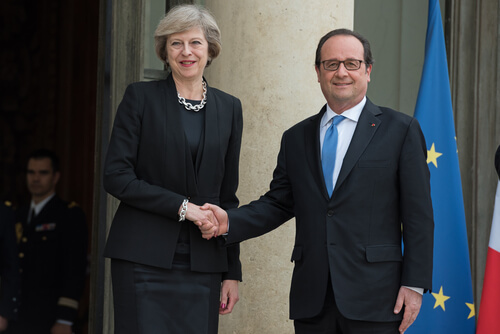 Although the industry has become accustomed to the challenges of working within the confines of a regularly changing government, the election has come earlier than expected and at a time when attention has been focused on the uncertainty of Brexit. With an unexpected shift in the political landscape on the horizon, projects hang in the balance.
Meanwhile, internal decision-making also becomes increasingly difficult during times of uncertainty. Reporting on the industry’s chances of weathering the snap election, Chloë McCulloch pointed out the effect of such uncertainty on the likes of hiring and investment, when private sector investment is already suffering. Decisions will now almost certainly have to wait until after the election, but at a time when tackling the skills gap is so crucial, can the industry face waiting?
Platform for Change
Despite short-term uncertainty, many more industry commentators have been vocal in arguing that the snap election could provide the sector with the long-term stability it needs – especially in the run up to Brexit.
Writing on behalf of design and consultancy firm Arcadis, Market Intelligence Lead Will Waller argues that a newly-elected government with a clear mandate could provide UK construction with much-needed stability as it enters negotiations with the EU.
“The UK needs a secure and stable political environment to ensure demand levels are sustained.” Will Waller
Some commentators – such as BSRIA Chief Executive, Julia Evans – don’t believe the government even needs to change for the snap election to have a positive outcome for construction. Evans holds the opinion that the lead up to the election could serve as ‘the most wonderful platform for the Prime Minister to lay out her strategy’.
Opportunity for Confidence
In the current political climate, there is an opportunity for the government to create long-term stability through clear mandates and purposeful solutions. This conclusion echoes the sentiment of the professionals whose thoughts were gathered by Construction News. Rather than taking uncertainty over stability, or vice versa, this balanced outlook seems to be supported by the wider industry as a whole.
Sharing his thoughts on the matter, Mark Farmer – author of last year’s Farmer Review – summarised the issue by stating that whatever the outcome of the election, real solutions must be offered that benefit construction.
“We need to see a reasonable level of cross party consensus on a coherent and comprehensive skills and innovation agenda that is not interrupted by endless political turmoil.” Mark Farmer, Via Embark Recruitment
If the government can deliver these solutions and represent the industry’s best interests at Brexit negotiations, then despite some short-term uncertainty, the snap election could be provide the opportunity that UK construction has been waiting for.
Kaleida is a bespoke software development house based in Manchester, which works with firms in areas such as construction to overcome both industry-wide and company-specific challenges through bespoke solutions. To find out more about our services, feel free to get in touch.