

As Blockchain’s meteoric rise to popularity continues, the cryptocurrency predecessor has caught the eye of an unlikely – if inevitable – audience: big brands. Now, names like Facebook, HTC and Google are turning their attention to the innovation gripping imaginations. But will it fare any better in their company, or does this newfound attention undermine Blockchain’s very appeal?
As if to leave no stone unturned in the quest to make Facebook all-encompassing, Mark Zuckerberg recently announced the social media giant’s burgeoning foray into Blockchain. The news came at a fortuitous time for Facebook, as the memory of the Cambridge Analytica scandal and various congressional hearings refuses to fade from the public’s recollection. Instead, attention is being drawn towards an innovation which, to some, remains enigmatic.
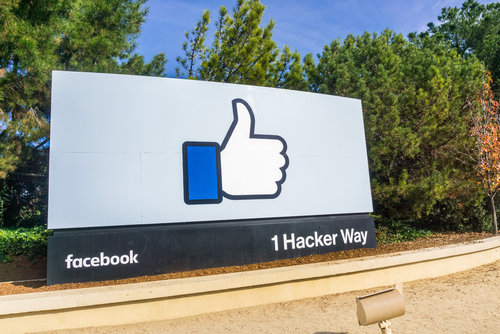
Facebook isn’t alone in its ambitions, either: an increasing number of tech giants are seeking to develop their own uses for Blockchain, investing heavily in researching the technology. But with roots in cryptocurrency and the promise of unprecedented data protection, does Blockchain really belong in the mainstream? And how will big time interest affect the distributed ledger?
Why the Attraction to Blockchain?
As CNBC’s Ari Levy points out in his reporting on the subject, Facebook is very good at hoovering up new innovations and burgeoning technology in an effort to stay one step ahead of competitors, and to remain entirely relevant in a rapidly changing world.
Blockchain is the next in a long line of such innovations – and one which could give the platform a winning edge. It’s not just the possibilities on offer which explain away Facebook’s interest, either: Blockchain represents a significant threat to a social network which is run like a centralised government. In contrast, Blockchain allows for distributed freedoms, and isn’t meant for central control.

Other interested parties have made their reasoning perfectly clear. Sirin Labs, for example, have developed a Blockchain mobile phone which allows for easier Bitcoin trading between users. Similarly, HTC’s upcoming Exodus will act as a cryptocurrency node, positioning the telecoms brand in a prime area of interest.
HTC isn’t just focusing on Blockchain’s intertwined Bitcoin origins either. Thanks to Blockchain’s nature as a secure and distributed ledger, HTC can offer users greater privacy and control over their data. According to HTC Vive founder Phil Chen, speaking at the New York City Blockchain Conference, HTC envisions “a phone where you hold your own keys, you own your identity and data, and your phone is the hub.”
A Chance to Grow
Despite the different Blockchain applications being touted by these big names, the benefits of their intervention remain the same. Behind the likes of Google and Facebook is a key resource that many in the cryptocurrency game are lacking: vast fortunes.

By leveraging their resources and investing in research, as well as testing on a huge pre-existing user base, tech giants can give Blockchain the space it needs to grow and be developed for new uses. There’s the potential, then, that the mainstream could be more than beneficial to Blockchain.
It’s clear that each of these brands is willing to invest heavily as well, even turning top talent from their managerial ranks into the heads of their own Blockchain research teams, as well as reaching out to talent already known in the world of cryptocurrencies and distributed ledgers.
In short, no expense is being spared to make sure Blockchain works for them.
The Cost of Investment
Despite the growth opportunities on the table, however, there are many concerns already being voiced from the Blockchain community. For a start, the idea of Facebook and Google having access to a technology which was founded on the principal of decentralising control is ironic – and a little unsettling. There’s a risk, then, that Blockchain’s independence will be undermined by its application in Google or Facebook’s machinations.

For smaller players such as HTC, the risk is not so high. Instead of anything potentially sinister, the mobile giant is instead attempting to utilise new technology to offer something its competitors don’t, and to make sure that as Blockchain grows, so do they.
If they want to get involved with Blockchain, tech giants have realised that they will have to court the current pioneers, as Google attempted with Ethereum founder, Vitalik Buterin. But following a now-deleted public poll asking for the community’s advice, it’s clear that people are not in favour of the likes of Google taking an interest in cryptocurrencies and Blockchain.
Weighing Up the Future
There are two clearly defined lines in the Blockchain debate: some, who have perhaps followed the movement since its inception, want to keep the innovation disruptive and independent. Others – namely Silicon Valley dwellers – want to take Blockchain in a new direction. Is there a compromise to reach?

Depending on how Facebook and its peers use Blockchain – either to the benefit of their users, or in a way which helps the startup economy to thrive – the move to the mainstream might be exactly what Blockchain needs to reach credibility with a wider audience. And even if it’s not, as with most other fascinating technological innovations filled with potential, the move was most definitely inevitable.
Kaleida is a bespoke software development house based in Manchester. To find out more about our work with clients, feel free to explore our case studies page, or get in touch to talk to our team directly.